A European layer in a global company: our view on the Cohere and Aleph Alpha combination
On September 16th, 2026, Cohere and Aleph Alpha signed a definitive business combination agreement that brings the two companies together under Cohere as a single transatlantic group. Separately, and priced on its own terms, Cohere will raise a Series E after the merger. The transaction remains subject to final regulatory approvals and is expected to close later this year. Burda Principal Investments first backed Aleph Alpha in its Series B and will remain a shareholder in the combined company. We believe this is the right outcome and explain why by revisiting the thesis that originally led us to invest.
What did we back in 2023?
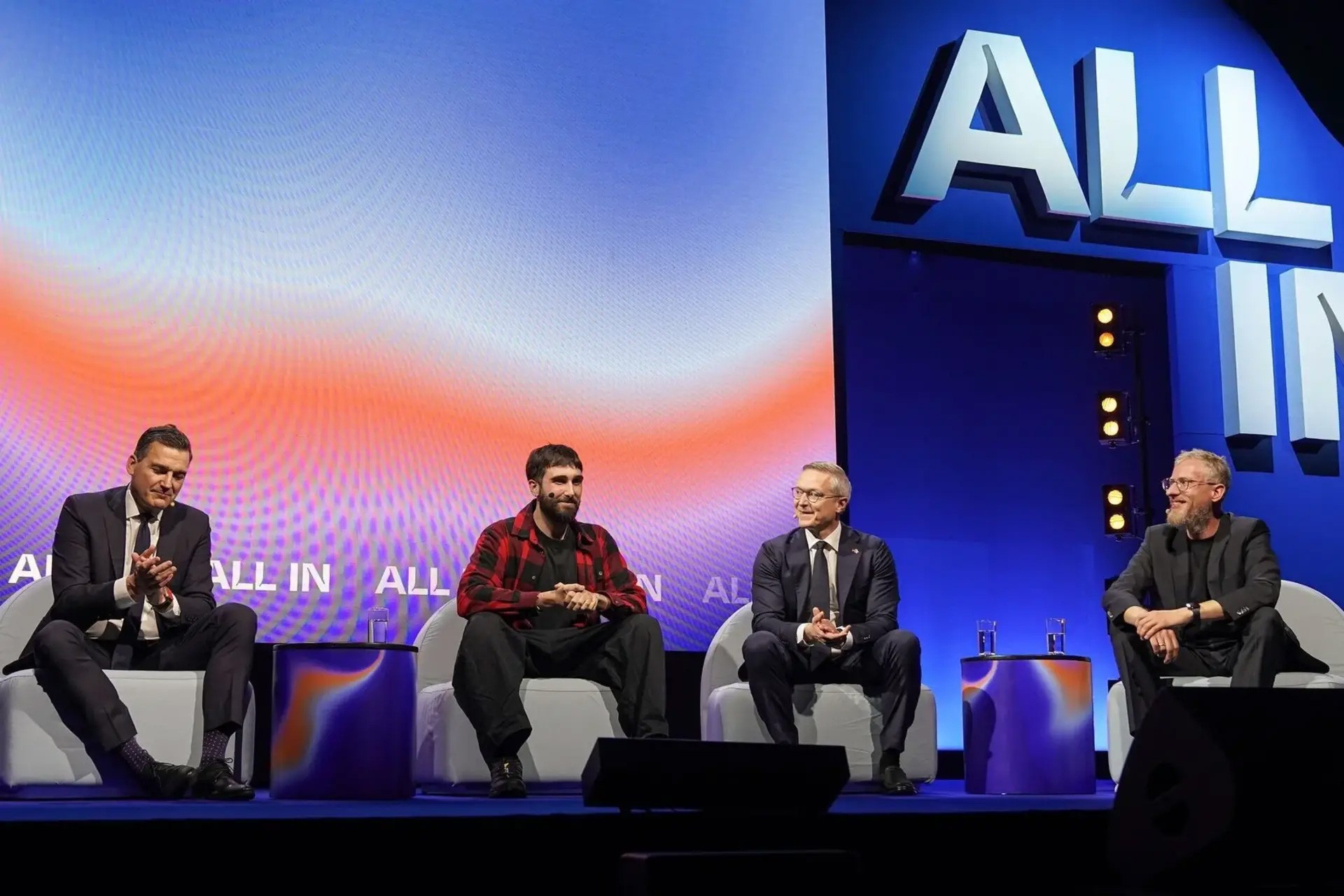
We met Aleph Alpha’s co-founder Jonas Andrulis at one of our DLD dinners shortly after the seed round in 2019. We joined Aleph Alpha’s Series B in Nov 2023: a round of more than $100m in equity plus a research grant, led by Schwarz Group and Bosch, with participation from SAP, Earlybird and UVC, among others. In Nov 2024, we increased our position via a secondary, buying alongside Earlybird, Deutsche Bank, and Schwarz Group. We also introduced Aleph Alpha to our Southeast Asia ecosystem and hosted them on stage at Super AI.
Our thesis at the time rested on a specific claim: that generative AI would generate durable value where it was built around proprietary data, explainability and control, and that a large set of enterprises and public institutions would need to run AI on terms they set themselves. At the time, Aleph Alpha had already built one of the few large language models on the continent operating at relevant scale on European standards of privacy and transparency.
Three years later, the first half of that thesis has held up strongly. Sovereignty grew as a key value driver across defense, energy, finance, healthcare, manufacturing, and the public sector. Aleph Alpha pursues exactly the AI layer that sovereignty demands: models tuned for multiple languages, an orchestration and governance stack for secure on-premise deployment. This is underlined by reference customers, including multiple public institutions handling sensitive data, such as the Bundesagentur für Arbeit and highly regulated enterprises, such as Deutsche Bank.
The second half of the thesis moved. Capital intensity in frontier model training rose faster than any European company could fund on its own, and the competitive question shifted from who trains the best general model to who can deploy governed, accurate, deeply customised systems inside institutions that cannot send their data anywhere. Aleph Alpha read that shift and repositioned around the sovereignty and orchestration layer rather than chasing the frontier model race exclusively.
Ilhan Scheer, Co-CEO of Aleph Alpha, frames the last twelve months as a sharpening of focus on specialised models for governments and regulated industries, with Cohere now supplying the global reach and deployment capability to match. The mission, in his words, is “giving organizations control over the AI they rely on.”
Why the combination in 2026?
Cohere arrived at a similar conclusion on the other side of the Atlantic. Founded in Toronto in 2019 by Aidan Gomez, Ivan Zhang, and Nick Frosst, it built an enterprise business reaching >$240m of annual recurring revenue in 2025 with a full-stack platform designed from the start for private and on-premise deployment.
Aidan Gomez, co-founder and CEO of Cohere, puts it: “No government or enterprise should have to choose between capable AI and control over their technology.” He wants frontier AI “powerful enough to compete, but secure and governable enough to trust.”
What the combined company has that neither had alone is the whole stack in one place. Model ownership and research scale sit with Cohere. The governance layer, the European language work, and the German public-sector and regulated-industry relationships sit with the team in Heidelberg. The combined group is dual headquartered in Berlin and Toronto, with the Heidelberg office kept as a research centre. The workforce will grow to more than 1,000 people across the two continents.
On closing, two of the combined company’s most senior global roles go to Aleph Alpha executives. Ilhan Scheer becomes COO, running the global operating model and organisational scaling, and Aleph Alpha co-founder Samuel Weinbach becomes Chief Research Officer. Both appointments are a clear signal of how the two sides intend to run the company together.
This is the shape of a company that can win the sovereign enterprise segment globally, not only in Germany and Canada. Gartner puts worldwide AI spending at $2.5t in 2026, on a path toward roughly $3.5t in 2027. Within that, the regulated and public-sector workloads where sovereignty is a purchase requirement are prime targets for Cohere / Aleph Alpha. A German anchor position in that segment is a valuable asset, and it is worth more inside a company with global model capability, seven-plus offices, and a partner set including Schwarz, SAP, and others, than it was as a standalone.