A game studio from Munich building the future of survival gaming
The survival genre has a remarkable pattern: small teams build massive franchises. Valheim shipped with five people and became a global phenomenon. Rust, Palworld, and Ark all generated hundreds of millions in revenue from studios most investors had never heard of. Time and again, a handful of developers with a clear creative vision and deep genre instincts produce outsized returns.
And yet, the survival genre remains largely overlooked by institutional investors in Europe. We think that’s an opportunity. welevel is BPI’s entry into gaming, and here’s why we think the setup is compelling.
The Company
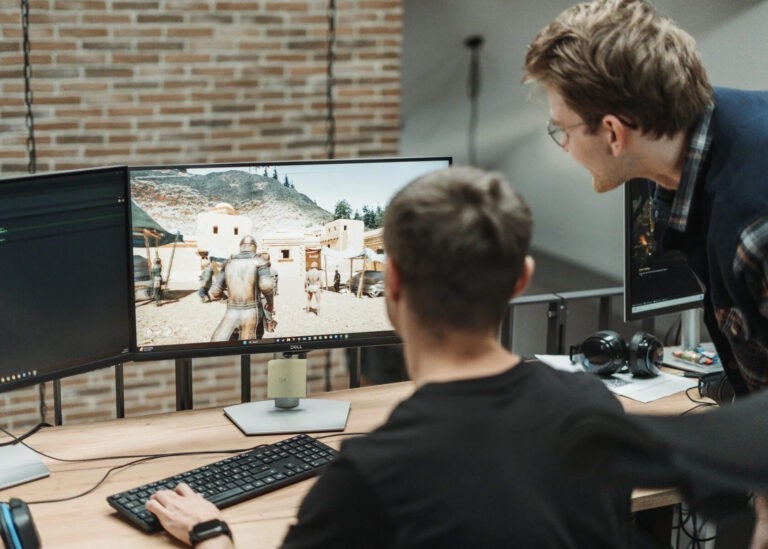
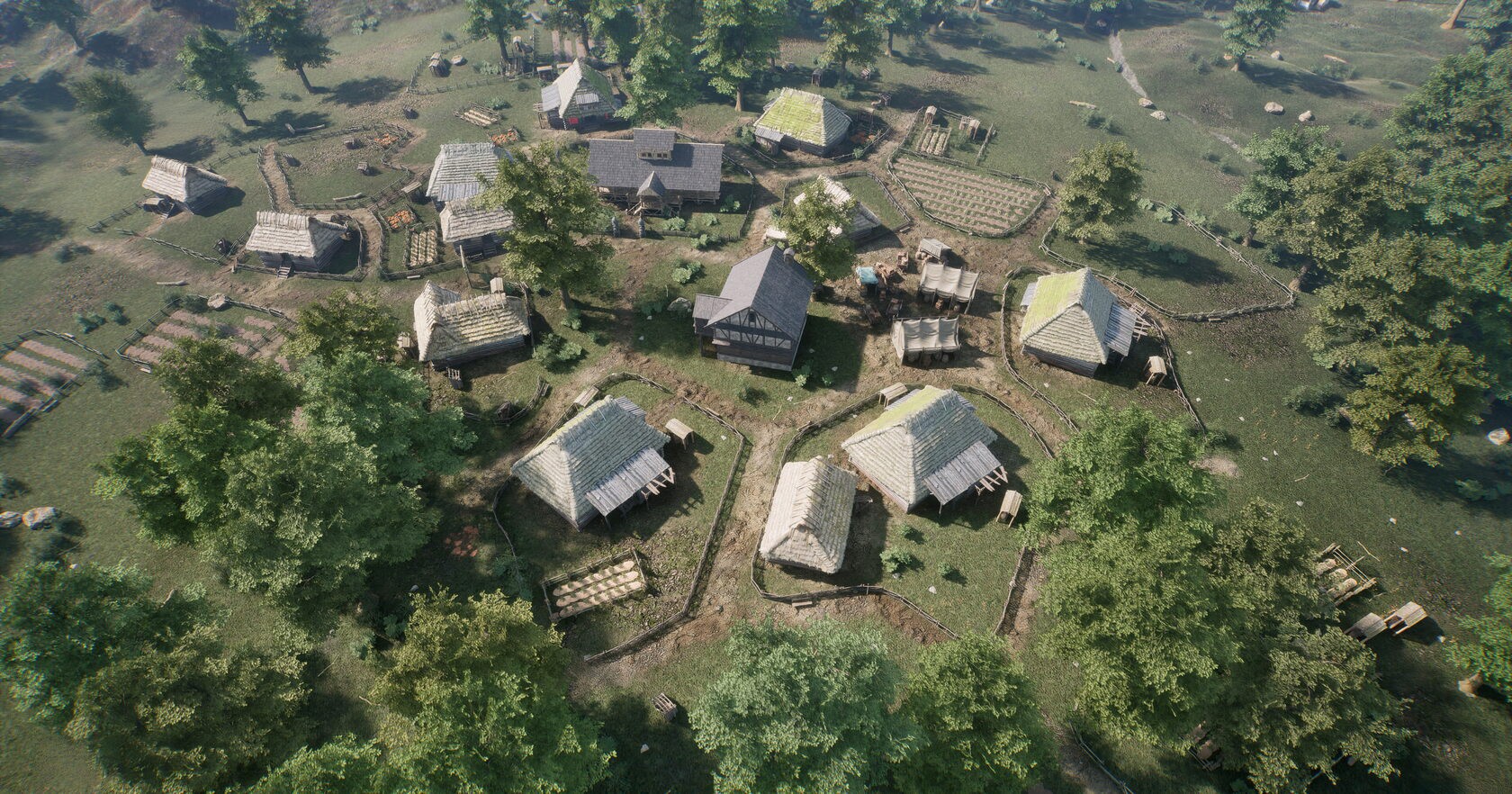
welevel is a Munich-based game studio founded by serial entrepreneur Christian Heimerl. The company is building SolidRiver, a co-op survival city-builder RPG on Unreal Engine 5 that blends third-person survival and base building with top-down management, crafting systems, and RPG progression across multiple biomes. Think Valheim meets Frostpunk meets Minecraft at AAA production quality.
But here’s what makes welevel different from every other indie studio pitching a survival game: they’re not just building a game. They’re building a technology platform.
The Technology
At welevel’s foundation sits a proprietary architecture layered on top of Unreal Engine 5. It combines custom fine-tuned LLaMA models, NVIDIA ACE for real-time voice and facial adaptation, and custom RAG pipelines for procedural world generation, all wrapped in a modular, API-accessible engine.
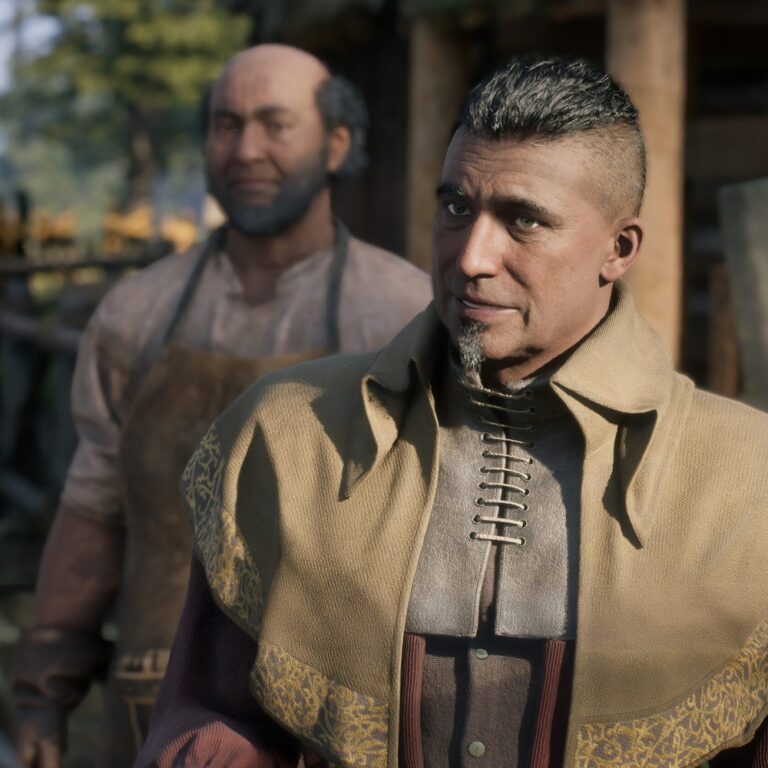
On the runtime side, fine-tuned LLMs act as “Game Master Agents,” procedurally generating unique worlds with crafted civilisations, backstories, and narrative arcs. NPCs have persistent memory and adapt dynamically to player decisions. This isn’t scripted dialogue with a chatbot bolted on but a fundamentally different approach to how game worlds come alive.
On the production side, customised tools support the artists to prototype 3D assets, create animations, and produce sound. A 16-person team is producing output that would typically require 50+ people. If SolidRiver succeeds, the same architecture can power Games 2, 3, and 4 at a fraction of traditional development cost.
The moat isn’t in any single component. UE5, LLaMA, NVIDIA ACE, and Flux are all available to others. The moat is in the integration layer and workflow IP that stitches everything together. This is the “content first, platform later” playbook that produced every successful game engine in history: Unreal was built on Unreal Tournament, id Tech on Doom, Frostbite on Battlefield.
The Founder
Christian Heimerl is a serial entrepreneur with multiple exits and financial security. He bootstrapped welevel from 2021 to 2025 before raising a Seed round. He’s building for a large outcome, not a soft landing.
His main risk is straightforward: no prior game shipping experience. But what we’ve observed is exceptional iteration speed, structured systems thinking, and a remarkable attention to craft, underpinned by 30+ years as a dedicated gamer. Transcend Fund initially passed on the company but came back to lead the next round after watching Christian execute exactly what he said he would.
That pattern, scepticism turning into conviction, is one of the strongest founder signals we know.
Why BPI
This deal sits at the intersection of two things we care about: AI-native companies and building a gaming ecosystem in Munich.
While Transcend and BITKRAFT are US-focused, welevel was consciously looking for a local partner. BPI is the on-the-ground strategic partner opening doors for UnternehmerTUM collaboration, Burda Media distribution, and community building. Alongside our broader gaming program, welevel anchors a real gaming cluster in Munich. They and Crytek are the only two independent AAA-calibre studios in Germany.
The Momentum
Since raising its Seed round, welevel has hit every milestone it set out to. The team grew from 7 to 16, government grants were secured, a working build with proprietary AI shipped, and a closed beta attracted 1,000+ players with an average playtime of 14 hours.
German government grants cover the majority of development costs through 2027, making this one of the most capital-efficient paths to a AAA launch we’ve encountered.
Early Access is targeted for late 2026, with a full launch across PC, PS5, and Xbox in 2027.
The Risks We Accept
This is a pre-revenue, binary-outcome investment. Product-market fit only validates after launch. AI tooling is commoditising, and the 1–2 year integration lead welevel currently enjoys will narrow.
We’re comfortable with these risks because the downside is well contained. Grant coverage limits cash burn. The lean team enables fast iteration on player feedback. And if SolidRiver underperforms, the CLAI engine, modular platform, and team can be redeployed, either into new titles at a fraction of traditional cost or as standalone AI middleware.
What Gets Us Excited
The sandbox survival genre is massive and growing. It’s one of the few corners of gaming that repeatedly produces outsized exits from small teams, and unlike shooters or battle royale, it isn’t locked up by a single dominant publisher. SolidRiver serves three overlapping audiences (survival, city-building, RPG) with something genuinely novel, backed by technology that makes the experience fundamentally more dynamic than anything else on the market.
Microsoft’s acquisition of Mojang (Minecraft) and Krafton’s acquisition of Unknown Worlds (Subnautica) show what’s possible for category-defining survival games. The exit paths are real and well-trodden.
We’re thrilled to back Christian and the welevel team as they build something ambitious from right here in Munich. Game on.