
Investing in fusion: Why we invested in Proxima Fusion, Europe’s commercial fusion champion
Under our “BPI Breakthrough” strategy, we spend our time looking for the companies that will define the next decade of European technology. Very few carry the weight that Proxima Fusion does.
As AI reshapes the economy, energy is becoming the binding constraint on everything built on top of compute. Every model trained and every industry rebuilt on it resolves to the same question: where does the power come from, and is there enough of it. Our investment in Proxima is a bet that the answer, over the coming decades, is fusion, and that the company to industrialise it can be built here in Europe.
The market: energy is the new constraint
Data centres already draw more electricity than many countries, and the curve is steepening. Electricity output has long been the clearest proxy for industrial capacity, and access to firm, abundant power is once again becoming a determinant of which economies lead and which fall behind. Renewables are essential, but on their own they cannot carry a load that is set to more than quadruple in the decades ahead.
Fusion is one of the few technologies that can change that equation: clean, high-density power that runs continuously and can be delivered where it is needed, on existing grid infrastructure. The company that industrialises it will not only win a share of a multi-trillion-euro power market. It will help underwrite the next century of economic growth. That conviction is why we invested.
Why stellarators
Magnetic confinement fusion has two main architectures: tokamaks and stellarators. Tokamaks are easier to design and build, but they rely on a strong induced plasma current that makes steady, continuous operation harder to achieve. Stellarators are current-free, inherently more stable, and for that reason widely considered the more promising path to a commercial power plant that has to run around the clock.
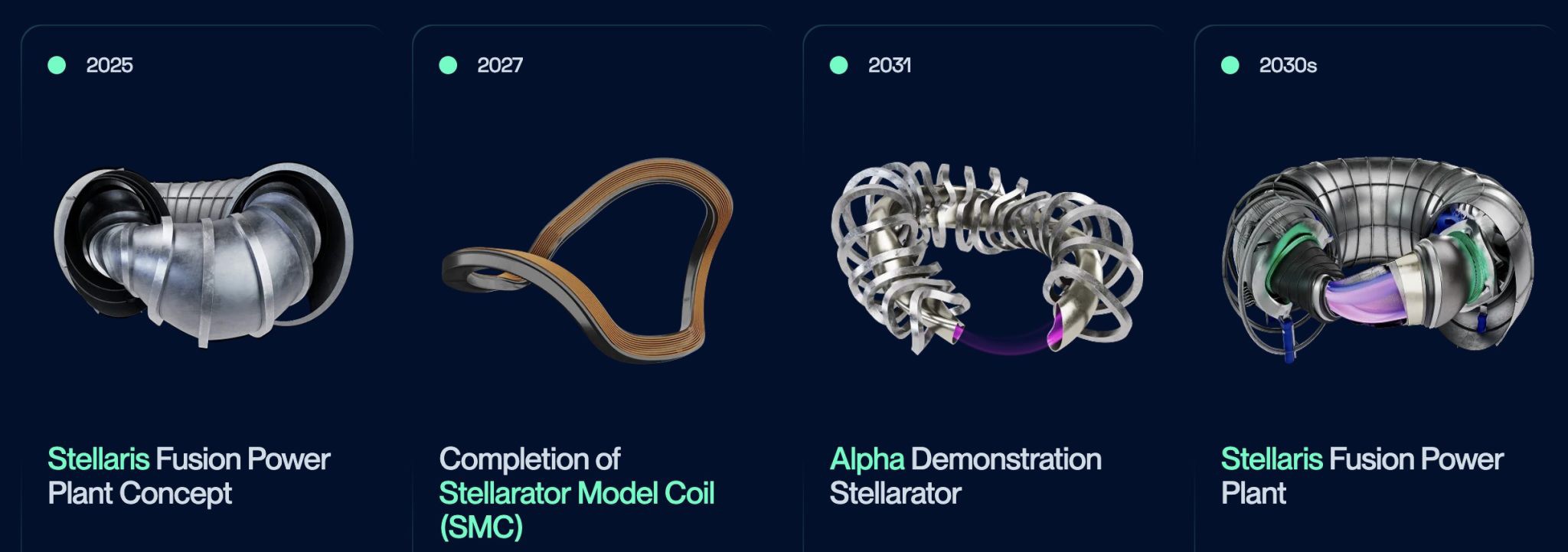
Proxima builds quasi-isodynamic (QI) stellarators using high-temperature superconducting (HTS) magnets, an approach grounded in real experimental validation. The Wendelstein 7-X experiment at the Max Planck Institute for Plasma Physics established the credibility of QI stellarators as candidate power plants. In early 2025 Proxima published Stellaris, the first peer-reviewed integrated design for a commercial stellarator power plant. The remaining hurdles are largely engineering problems, not open questions in physics. For an investor, that distinction is everything.
A team that builds
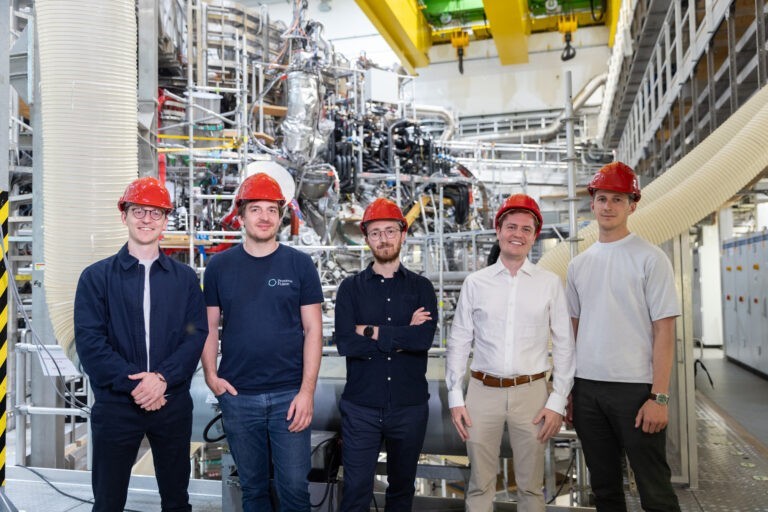
We first met Francesco Sciortino and the founding team early in the company’s life during their time at UnternehmerTUM and have followed them closely ever since, including hosting Francesco on stage at various DLD events. We came away from every conversation with the same impression: this is a group that has what it takes to overcome the engineering challenges associated with their mission.
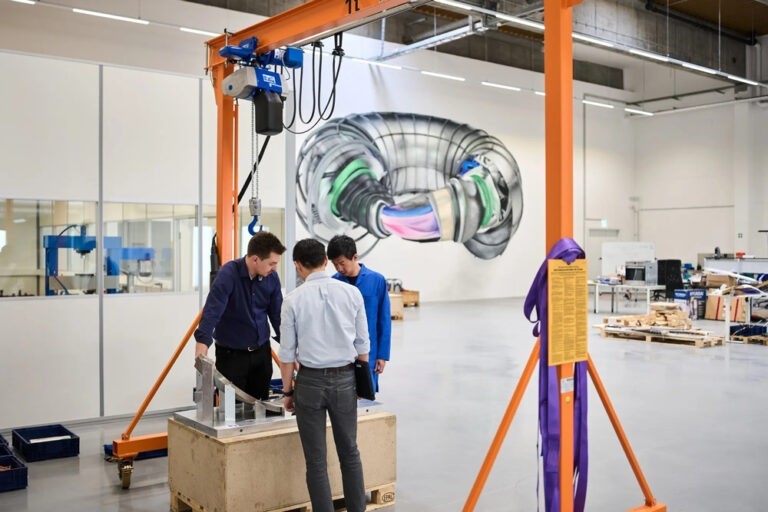
Proxima was conceived from the outset as an engineering company aimed at commercial power, not a research project hoping to become one. As the first spin-out of the Max Planck Institute for Plasma Physics, it has grown to around 200 people across Munich, Zurich, and Oxford in under three years, and has moved from concept to a concrete industrial roadmap on a timeline that is hard not to be excited about. The rare combination here is scientific depth paired with genuine industrial execution.
From Alpha to Stellaris
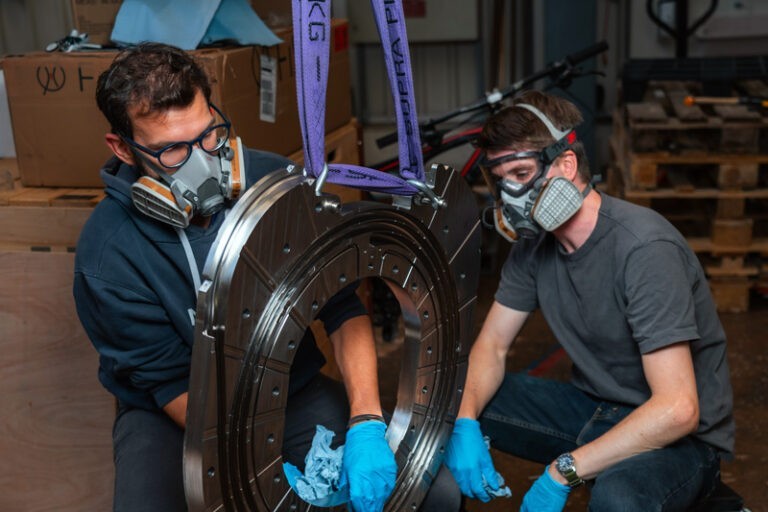
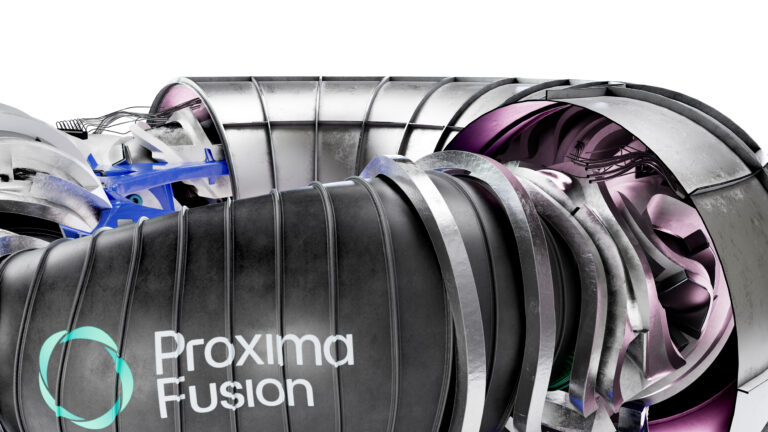
Proxima is building Alpha, a net-energy demonstrator in Garching near Munich, targeted for the early 2030s. Alpha is the step toward Stellaris, the world’s first commercial stellarator power plant, planned with RWE on the site of a former nuclear fission plant in Gundremmingen, Bavaria. The site is already connected to the grid and comes with a utility partner committed to operating the plant, which is unusually concrete for a company at this stage and removes a major commercialisation uncertainty. The new capital will complete Proxima’s Stellarator Model Coil and scale the HTS magnet and cable production at the core of the roadmap.
A European moment
Our investment sits inside a €411m Series A2 that is, above all, a European statement. XTX Ventures and East X Ventures led the round, with RWE and Google joining as strategic investors, in what is Google’s first investment in a European fusion company. KfW Capital, SPRIND, and a deep bench of European funds joined alongside returning backers. It is the largest fusion financing Europe has ever seen, and one of the largest private technology rounds on the continent this year.
What makes it a genuinely European effort is how public and private capital reinforce each other. The round matches, and exceeds, the €400m that the Free State of Bavaria committed to Proxima for the Alpha demonstrator under the February 2026 memorandum of understanding. On top of that sits a broader federal commitment: through its Fusion Action Plan, the German government has pledged more than €2b to fusion over the coming years, with the stated goal of hosting the world’s first fusion power plant. Private capital and public backing are reinforcing each other here in a way that is rare for a technology this far from market.
The cap table is almost entirely European, anchored by the utility that will help build Stellaris. That is the point: this is Europe backing a company it cannot afford to lose.
Why this fits BPI
Proxima is a textbook BPI Breakthrough investment (others include Uluu and Planet A Foods): a deep-technology company anchored in Munich with the potential to become one of the most significant companies of its generation. We have followed and supported the team since well before this round, and we believe our broader network can be genuinely useful to a company whose horizon is measured in decades. We are also glad to help bring long-term European capital alongside the mission, a base that is naturally aligned with Proxima’s timeframe and its role in European energy sovereignty.
Looking ahead
We could not be more pleased to join this mission at such a decisive moment, alongside founders and partners who believe, as we do, that fusion is Europe’s to build. The road to commercial power is long and the risks are real, but the direction is set, and we intend to stand behind Proxima along the way.
To learn more about Proxima, visit proximafusion.com