
The Future of Personalised Health and Wellbeing
If the last decade of digital health was defined by tracking data – counting steps, monitoring sleep, and logging calories – the current era is defined by intelligence. Detailed tests and precise tracking devices were previously associated with high costs and extensive effort, but have become accessible to average consumers and are actively shaping our daily lives today. As we settle into 2026, wellbeing has graduated from a hobby for health-conscious enthusiasts to a fundamental pillar of the daily routine of millions of people, powered by technology that is smarter, faster, and more intuitive than ever before.
This shift extends beyond just consumer trends and is fundamentally reshaping patient care. At the DLD Conference 2026, the topic of tech-enabled wellbeing took centre stage through the BAIOSPHERE track, touching on the medicalisation of consumer devices and the consumerisation of clinical tools. The bridge connecting these two worlds is Artificial Intelligence (AI). We are no longer just collecting data, we are using AI to metabolise that data into predictive insights that can fundamentally change how we live.
In this article, we explore current trends in tech-enabled wellbeing, what industry leaders are working on, and what the future of health could look like.
The Consumer Shift: From Passive to Continuous Tracking
The Quantified Self movement of the 2010s gave us a first glimpse of how consumers think about the symbiosis of tech and health. Many people started counting daily steps and using tech to store insights. Wearables made their way into the broader consumer market, though their functions were often limited to basic activity tracking.
Today, we are witnessing the natural evolution of this movement. We have moved beyond the era of occasional tracking to a reality of always-on biological surveillance, powered by a new generation of hardware and intelligence.
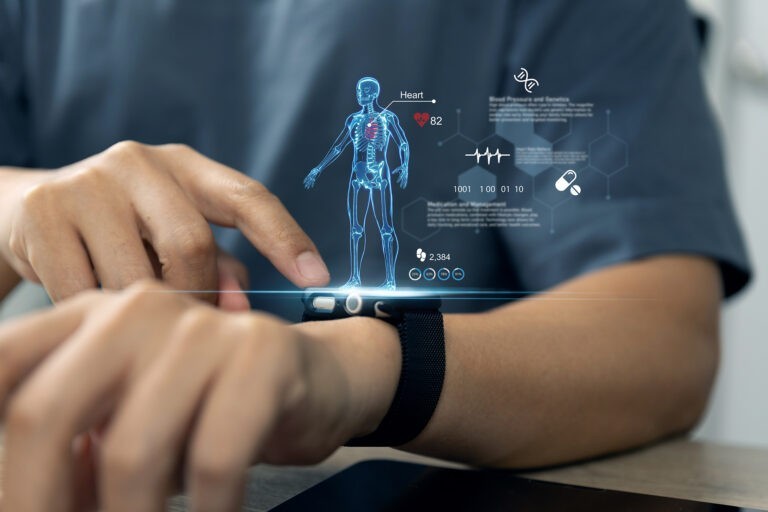
- The Hardware Layer: Companies like Oura and Whoop have succeeded by making health tracking invisible. They have shifted the paradigm from activity tracking (logging a run) to recovery monitoring (measuring how your body handles stress 24/7). These devices are no longer just pedometers, they are early warning systems for the body, capable of detecting illness days before symptoms appear by tracking subtle deviations in heart rate variability (HRV) and temperature.
- The Intelligence Layer: If wearables are the sensors, AI is like the doctor. We are seeing a massive shift in how consumers access diagnostic information. Tools powered by advanced models, like OpenAI’s new health model, are effectively giving every consumer a primary care physician in their pocket. Consumers can upload lab results, wearable data, or images of skin conditions directly to AI agents that provide clinical-grade context. This is democratising diagnostics, allowing users to interpret complex blood panels or symptom clusters instantly, and turning patient data into patient power.
More than anything, we are witnessing the beginning of truly personalised health. Beyond capturing information at scale, AI-powered analysis of data and connections paves the way for providing tailored recommendations and actions to consumers.
Clinical Care: The AI Revolution
While the consumer stack empowers the individual, we find just as exciting developments in the medical landscape where AI allows us to bypass the physical limitations of traditional healthcare.
Today, patients go from round-the-clock monitoring in a hospital bed to virtually zero oversight the moment they are discharged. Through remote monitoring, intelligent triage, and connected devices, all treatment and follow-ups that once required a hospital visit are increasingly being digitised and moved into the home. Redundant follow-up visits are replaced by continuous, intelligent monitoring; scarce clinical attention is redirected to patients who actually need it. The result is a system that is not only more effective for the patient, but fundamentally more sustainable.
Beyond redistributing care, AI is turning scarce clinical resources into abundant software capabilities, effectively supercharging legacy hardware. Just to build on some examples discussed during the DLD conference:
- The Supercharged Electrocardiogram (ECG): Researchers are training AI to see previously hidden data patterns. By training models on both ECG and MRI scan data, we can create AI that delivers MRI-level insights based on cheaper ECG signals1. Ultimately, even a standard smartwatch ECG could predict structural realities like heart failure or biological age, effectively giving a $500 consumer device the diagnostic utility of a $50,000 clinical machine.
- Generative Imaging: Generative AI allows for high-fidelity image reconstruction from significantly less data, enabling low-field, portable MRI machines. This transforms imaging from a rare hospital event to a routine clinic check-up, allowing for frequent scanning, while also reducing the cost of medical bills.
The Innovation Landscape: Where Capital Meets Clinical Reality
The convergence of capital, consumer behaviour, and clinical breakthroughs signals that we are entering a new cycle of innovation. The market has matured: investors are no longer funding nice-to-have lifestyle apps or generic fitness trackers. They are funding infrastructure that fundamentally alters the cost curve of care and delivers measurable biological outcomes.
Capital as a Signal: The Flight to Smart Quality
Money flows where value is durable. Investors are looking for platforms that can aggregate data and derive proprietary insights, rather than just selling hardware.
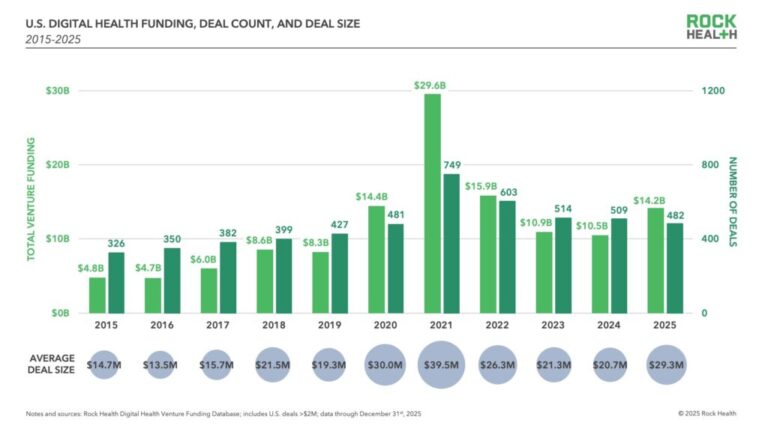
- The Numbers: U.S. digital health startups raised $14.2 billion2 in 2025, a 35% increase year-over-year, fuelling a new generation of companies blurring the lines between tech and care.
- Wellbeing and Fitness: Startups building in the wellbeing and fitness vertical attracted $2.0 billion in 20252. Capital is consolidating around platforms (like Oura and Function Health) that turn biological data into assets, separating data-owning winners from widget-making losers.
Conclusion: From Biology as Destiny to Biology as Design
The landscape of wellbeing is at an inflection point. The ultimate destination of current trends is a transition from prescriptive care (fixing what is already broken) to predictive care, which optimises the system to prevent failure. This mirrors the evolution in industrial engineering, where we stopped repairing machines only when they smoked and started replacing parts when sensors detected microscopic variances. By merging the always-on data streams from consumer wearables with the deep pattern recognition of clinical AI, we are building a foundation that allows us to simulate outcomes and prevent disease before it even begins.
Looking ahead, this shift might manifest itself in two distinct realities:
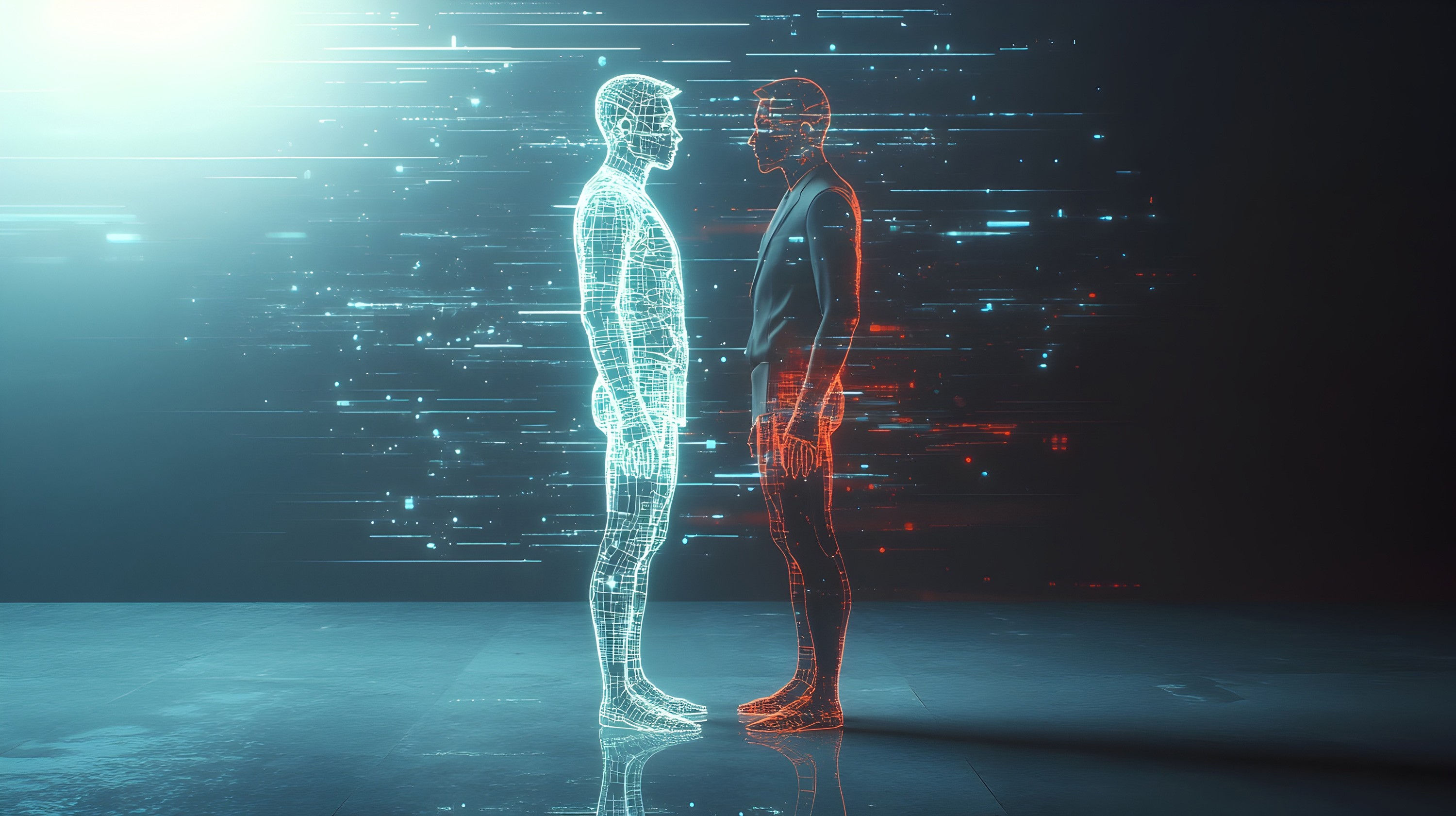
• Digital Twins: Moving beyond population averages, we will use virtual models of individual biology. Clinicians will simulate interventions on a digital avatar first, testing medications or protocols to de-risk treatment with unprecedented accuracy.
• Design for Delegation: The UI of the future is an outcome, not a dashboard. Systems will close the loop, automatically blocking recovery time or ordering nutrients, rather than just notifying users of issues.
While questions of data privacy and equity remain, the trajectory is clear. We are gaining the tools to process the noise of our daily biological existence at an unprecedented scale. The winning technologies of the next decade will give us the predictive agency to shape tomorrow, turning the uncertainties of health into manageable variables.